
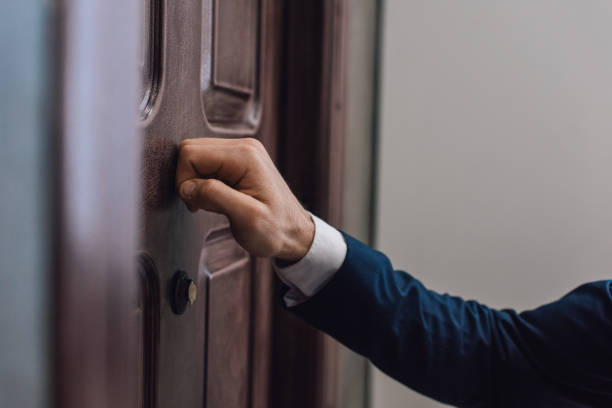
A Private Shiva? Comforting a Subject, Not Handling an Object

Private shiva? Whoever heard of such a thing? Isn’t that almost an oxymoron? Shiva, by its very definition, is public. The mourners open their homes, welcoming visitors who allow others to step into their grief and share the burden with them. That is the ritual we all know.

Recently, a situation in our community gave rise to this very question. A family requested a private shiva as a way of observing their mourning in a more personal setting. What prompted me to reflect was not the request itself, but some of the reactions it generated. A few expressed feeling disappointed at not being able to fulfill the mitzvah of nichum aveilim. Others wondered aloud why a family would choose to do this. Those responses revealed a genuine confusion about the nature of comfort and provided an opportunity to explore a perspective that, while familiar to some, might be less intuitive to others.

And yet, for some, the very fact that such a request could be made felt confusing, even objectionable. After all, isn’t there a mitzvah of nichum aveilim? Aren’t we commanded to visit and to comfort? Some even felt denied an opportunity, as if they were robbed of a mitzvah. Others, despite hearing the request, couldn’t resist the urge to reach out, to ask why, to insist on being present anyway. In several cases, these reactions were not shared privately or in passing conversation, but were directed to the mourners themselves, people in the midst of their own grief, now faced with the additional burden of justifying their choices. But this reaction misses something fundamental about what comfort actually means.

Nichum aveilim is indeed a mitzvah, but it is not like eating matzah or shaking a lulav, where the mitzvah is fulfilled through contact with an object. Matzah and lulav are objects; they have no will, no preferences, no capacity to refuse our interaction with them. Nichum aveilim centers on a person, a subject with feelings, needs, and agency. A person who can say yes or no, who has inner experiences we cannot access, who may need something entirely different from what we assume.

Our rabbis teach us that even in the traditional setting of shiva, the mourner leads. The halacha directs us not to begin speaking until the mourner speaks first. Even when we are sitting in the same room, the mitzvah unfolds on their terms, not ours. When we treat a mourner like an object for our mitzvah fulfillment, something we act upon to discharge our obligation, we have fundamentally misunderstood the nature of comfort itself.

When the Torah describes our duty to give assistance, it doesn’t simply command us to “give.” It teaches dei machsoro asher yechsar lo (Devarim 15:8) — meaning provide whatever is sufficient to meet that need, nothing more and nothing less. Our rabbis explain that this could mean food, clothing, or shelter. It might also mean restoring dignity or purpose, even through something that others might view as a luxury. The Torah’s concern is not with what appears objectively necessary but with what this specific person truly needs. The focus is on the subject, not the giver, and the sensitivity to what he or she may require to begin healing.

Nichum aveilim operates by the same logic. Sometimes a mourner needs the warmth of community surrounding them. Sometimes they need people to simply sit in silence. And sometimes, perhaps more often than we realize, what they need most desperately is space to grieve without performance, without explanation, without the exhausting weight of hosting others’ good intentions. To honor that request is not to abandon the mitzvah. It is the mitzvah.

Why would a mourner ask for privacy? From the outside, I admit to some hesitation even in answering that question. To do so almost undermines the very point being made — that the reasons belong to the mourner and are, in truth, none of our business. Even so, there are countless possible reasons, each valid in its own right and beyond our right to question. The relationship with the deceased may have carried its own wounds and pain, and the idea of revisiting it with others could intensify the grief. The mourner may be carrying wounds that outsiders can’t see. Sometimes the pressure of re-telling the story, again and again, feels unbearable. And sometimes the person simply lacks the strength to host, even well-intentioned visitors can feel overwhelming. In all of these cases, the responsibility of chesed is to trust the mourner’s voice. Not to question, not to speculate, and certainly not to push back.

When someone shares only part of a medical journey, or hints at family struggles, they are choosing what to disclose. The mitzvah is not to press for details, not to probe for more, but to respect the boundary they have set. True chesed often means resisting our curiosity, silencing our questions, and accepting that we are not entitled to know everything.

Even after shiva concludes, the spirit of that request remains. A family that asks for a private shiva is also, by implication, asking for privacy in the weeks that follow. It was shared with me that even long after the mourning period had ended, well-intentioned people still reached out with comments that began, “I know you wanted a private shiva, but…” Those words, however kindly meant, miss the same point. When someone has set a boundary, revisiting it later does not honor their healing — it reopens what they have asked to protect. Respecting privacy is not a temporary courtesy; it is an ongoing form of compassion.

Ultimately, the lesson extends far beyond mourning. In moments of loss, illness, or struggle, the truest kindness is not measured by presence alone, but by the sensitivity to discern when presence is welcome and when space is sacred. To offer that space is to affirm another person’s dignity, to trust their process, and to show that love need not always arrive at the door to be felt.

We often assume that chesed is measured in what we do, our presence, our words, our actions. But sometimes the truest chesed is measured in what we hold back: the questions we don’t ask, the visits we don’t make, the speculations we don’t voice. When a family requests a private shiva, honoring that request is not missing the mitzvah. It is fulfilling the mitzvah in the most honest way possible.

True nichum aveilim requires us to recognize that the mourner, not the visitor, sets the terms of comfort. Sometimes they need us near, sometimes they need silence, and sometimes they need distance. Real chesed is not about easing our own conscience. It is about giving the mourner what they ask for, even when what they ask for is nothing at all.

Fragile Walls, Unshakable Faith: Rethinking Zman Simchaseinu After October 7

(Summary of drasha delivered at Congregation Beth Aaron on Sukkos, 5786)

Yesterday was October 7, a date forever seared into our collective soul. It has become a tragic landmark of loss and resilience, a day that reshaped Jewish memory. And yet, by a painful twist of the calendar, the holiday of Sukkos is now bound to that day. The secular date, of course, will not always coincide with Sukkos, but the Hebrew date—the day of Shemini Atzeres—always will. The horror that unfolded on that holy day has fused itself permanently with the festival’s conclusion. And so the question inevitably arises: can we ever celebrate Sukkos again in an unshadowed way? Can Zman Simchaseinu, the “Season of Our Joy,” remain pure when so much trauma is now tied to these very days? Or will our joy forever carry the faint sound of heartbreak?

Even before October 7, Zman Simchaseinu was always a mysterious phrase. Every other chag defines its joy. Pesach is Zman Cheiruseinu, the time of our liberation. Shavuos is Zman Matan Toraseinu, the time of the giving of the Torah. Even Yom Kippur, though somber, is remembered by Chazal as one of the most joyous days in our calendar, because it is a day of forgiveness and renewal. But Sukkos offers no explanation. The Torah simply commands us to rejoice. There is no explicit cause, no stated reason, no narrative of redemption or miracle. If you ask a child why we celebrate Sukkos, they might answer, “Because we sit in the sukkah.” But that’s not an explanation—it’s a description. The sukkah itself becomes the setting for joy, not its source. So what exactly are we happy about?

Perhaps the answer lies in how we understand joy itself. Most people experience happiness as something reactive. I’m happy because I received good news, because something good happened to me, because a blessing came my way. That kind of joy is conditional—it depends on external circumstances. But there is another kind of joy, one that is deeper and more enduring. It is not tied to events but flows from within, a quiet sense of stability and faith. This kind of joy is not the thrill of celebration but the calm of trust. It is the serenity of knowing that life, with all of its uncertainties, remains guided by the hand of Hashem. It is the peace that comes from being anchored, even when the winds around us are unpredictable.

There is a remarkable passage in the Gemara (Berachos 60b) that reveals the essence of this kind of joy. When one recites the blessing Baruch Dayan HaEmes upon hearing tragic news, the Gemara says it must be said b’simcha—with joy. On the surface, that sounds almost impossible. How could a person in mourning feel joy? But Rashi there explains: “לברך על מדת פורענות בלבב שלם.” To accept suffering b’simcha, says Rashi, means to bless Hashem even for measures of affliction, b’levav shaleim—with a complete heart. This is not the joy of laughter or celebration. It is the experience of serenity, of inner tranquility, of an equanimity that flows from faith. It is the calm assurance that life, with all its pain and uncertainty, remains held by the One who knows.

In this sense, simcha is not exuberance but balance — not the absence of sorrow but the presence of peace. It is what the Serenity Prayer, recited in countless rooms of struggle and renewal, calls the courage “to accept the things I cannot change, the courage to change the things I can, and the wisdom to know the difference.” That timeless plea captures the essence of b’levav shaleim — a heart that, though broken, remains whole. To say Dayan HaEmes b’simcha is to affirm that even in the face of loss, I still trust that there is meaning, that Hashem is just, that even when I do not understand, I can rest in His care.

If that is the meaning of simcha, then Zman Simchaseinu takes on new depth. It is not the time when everything is perfect. It is the time when we learn to feel anchored even when nothing feels certain. The sukkah itself is a living expression of this truth. It is the most fragile structure in halacha—its walls sway in the wind, its roof is loose and porous, its protection minimal. Yet that fragility is precisely the point. The sukkah forces us to let go of our illusions of control. When we leave our solid homes and step into this temporary dwelling, we symbolically acknowledge how little in life we truly control. And paradoxically, that very recognition becomes a source of comfort. The halacha that exempts a person who is mitzta’er—one who is suffering—from the sukkah, is not merely a technicality. It reflects the spiritual core of the mitzvah: the sukkah is meant to restore calm. It invites us into a space of faith, a place where fragility itself becomes protection. Beneath the open sky, surrounded by light and shadow, we learn that our security does not come from the walls we build, but from the trust we cultivate.

In the days following the attacks of October 7, I had the privilege to visit Israel, including many of the cities down south—the communities that were struck so brutally by terrorists that day, among them Sderot and other towns near the Gaza border. The streets were filled with the evidence of what had occurred—shattered glass, twisted metal, and shell casings scattered along the sidewalks. Buildings were scarred, cars burned, and signs of destruction and carnage were everywhere. And yet, in the midst of it all, the sukkot were still standing. These structures, meant to have been dismantled, remained upright—empty, brittle, and ghostlike in their stillness, yet hauntingly alive in their defiance. They stood as mute witnesses to tragedy and as testaments to endurance. I later described that scene in Look Who’s Standing. The image of those sukkot refusing to collapse became, for me, a metaphor for our people themselves. They bore the weight of history and pain, yet they still stood. Those sukkot were more than wood and s’chach; they were statements of faith. They seemed to say, wordlessly, that even when everything collapses, something must remain standing.

That image has remained with me ever since. I can still picture the quiet stillness of a neighborhood after Sukkos—the chairs folded, the walls left standing, the branches dry and brittle but still reaching upward. It is impossible not to think of our people in that image—the collective sukkah that somehow, through all the storms of history, remains standing. Those sukkot in Sderot became more than remnants of a holiday. They became sacred symbols of resilience, fragile yet unbroken, witnesses to the enduring shelter of Hashem.

And perhaps that is why October 7 and Sukkos are now bound together. On the surface, it seems we must find a way to reconcile joy and grief, to somehow celebrate despite what happened. But maybe the truth is that we celebrate because of what happened—not because suffering itself is good, but because it reveals what is unshakable. The sukkah was always meant to teach us that joy is not found in permanence but in presence, not in certainty but in surrender. When everything feels unstable, and yet we are still able to sit beneath the stars, under the open sky, surrounded by family and friends, to invite guests and to sing, we experience something profoundly real. Coming as it does after the Days of Awe, when we have achieved a rare clarity of perspective, Sukkos allows us to seize that clarity—to capture it and to live within it. That is the essence of Zman Simchaseinu: to dwell in the sukkah and to feel the peace that comes from knowing we are held, protected, and never alone.

This year, as we step into our sukkos, we do so differently. We carry the memory of October 7 with us. We remember what it means to lose, to fear, to ache. But we also remember the sukkah that still stands, the fragile shelter that somehow holds steady against the wind. Our joy this year is quieter, more reflective, but perhaps deeper than ever before. It is not naive joy but steadfast joy. Not a joy that forgets pain, but a joy that grows out of it. Zman Simchaseinu this year is not about being happy because all is well. It is about being at peace because, even when all is not well, Hashem is still with us. In the fragile shelter beneath the open heavens, we rediscover what it means to stand.