

Last week, a dear friend and close neighbor passed away. Our family has been fortunate to live directly across the street from Bernice Greenberg a”h and her beloved husband Mishel a”h for over 15 years. Like so many others who have departed this world over the past six months, many friends and admirers who would have surely attended her funeral were unable to do so, under the current circumstances. While no words could adequately capture a life of 96 years, I feel the need to share personal thoughts of tribute.
Mrs. Greenberg was an incredibly unique individual. She was an accomplished artist who displayed profound creativity in every context and through her insightful lens was able to reflect a fresh perspective in virtually every conversation. She was relatable to so many individuals, regardless of their ethnicity, background, or age. She had a wonderful and charming wit and a simple, yet pronounced, sense of humor.
There is one particular characteristic though that I would like to highlight in this tribute to her. During the almost 20 years that I had the fortune of knowing Mrs. Greenberg, she did not age at all. If anything, as time went on, she seemed to get younger, rather than older. While she may have not had the physical vigor at the age of 95 that she did at 75, her spirit was always young, her outlook always fresh, and she was forever playful and engaging. While aging is a fact of life and the physical toll it takes is not subject to one’s personal initiative nor input, Mrs. Greenberg made the conscious choice to remain, always and forever, young at heart. She sought opportunities that enabled her to experience life in a way that she had never before. She cherished moments in which she was able to be inspired and enlightened, even, if not especially, by individuals far less experienced than she. She took great delight when experiencing new discoveries about herself, her family, her community, and her heritage. Rather than feeling confused or frustrated, disgruntled or disappointed, her eyes and heart lit up with wonder and amazement whenever she was able to discover something she had never noticed before.
Yet, what inspired me most about Mrs. Greenberg was her insatiable desire to learn and to grow. On countless occasions, she shared with me how fortunate and blessed she felt to have been offered the opportunity to access many new outlets and channels for Torah study later in life. At times she would exclaim how proud she was to have become a serious student of Torah around the time of her 80th birthday. There was hardly a text that did not inspire her, nor a Torah subject that did not fascinate her. She had a genuine thirst to grow through Torah and to learn more about the universe and its Creator.
There is one particular moment that I will never forget. Our shul, like many others, offers programming for parents and children to come together and study Torah. “Parent-child learning” programs (on temporary hiatus, given the current state of global affairs) are typically populated by young children, escorted by one or both of their parents. While there is no official cutoff age, I do not recall seeing many kids post bar/bat mitzvah age, regularly participate in this program.
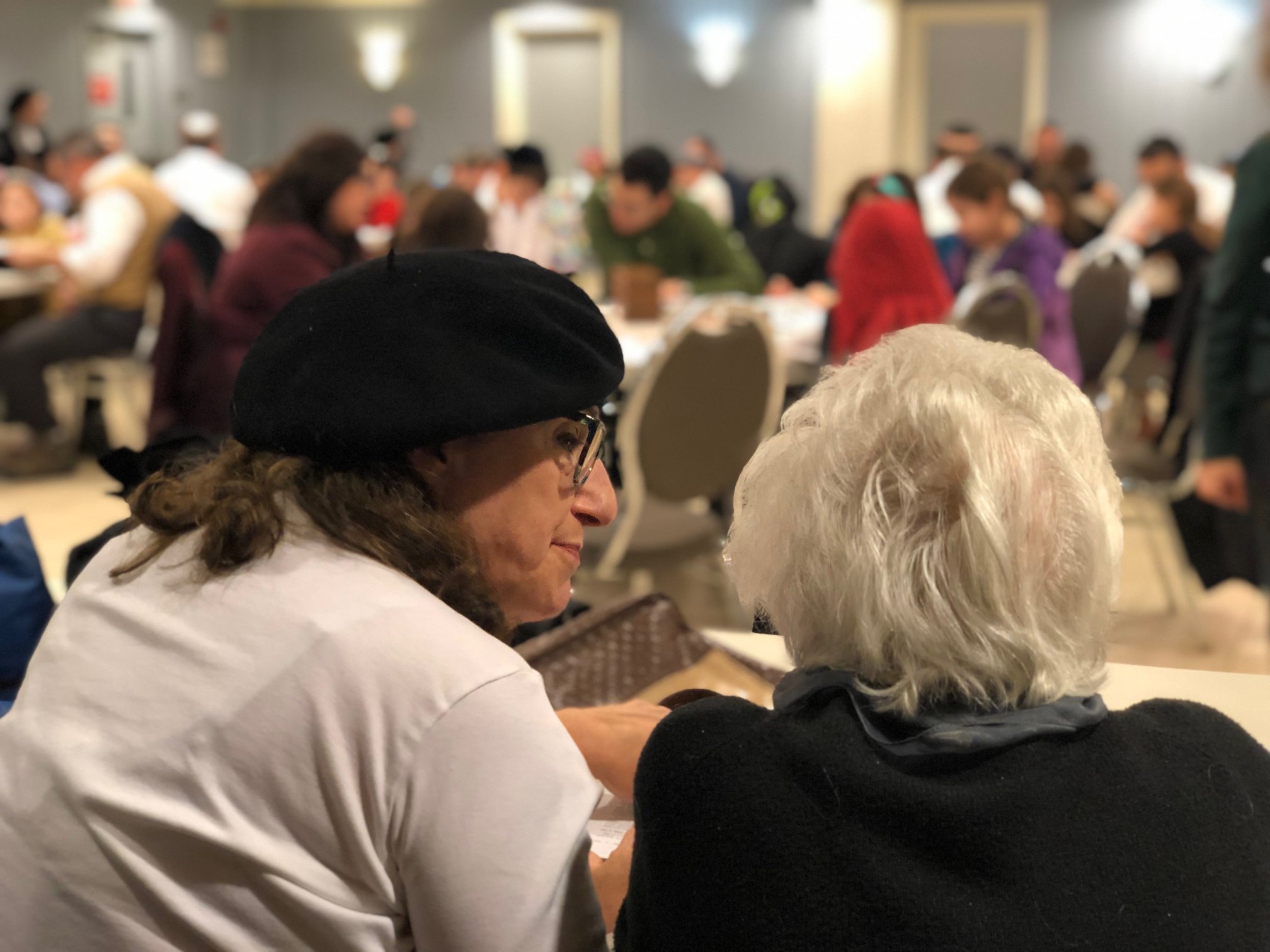
But, one particular chilly Motzei Shabbat last January, Mrs. Greenberg escorted her daughter Ellen and the two of them joined the crowd of other parents and children at our parent-child learning event. With a pirkei avot in hand, Mrs. Greenberg immersed herself in an ancient text, while surrounded by parents and children, several generations younger. Her presence that evening was a powerful testament and memorable lesson to everyone in the room. During that sacred moment, suffused by a powerful quest to connect with Torah, there was no generation gap to be seen. Mrs. Greenberg’s face radiated with the innocent curiosity of a young girl, excited to experience something transcendent, as if for the very first time.
In Shemot (33:11), the Torah describes Yehoshua as a “נער” (lad) even though he was 56 years old at the time. Rav Avrohom Sorotzkin z”l explains that this is an apt description for Yehoshua, for although he was an experienced mature adult, he possessed the curiosity for wisdom and the desire to grow as if he were still a child. It is for this reason why he was selected to become the successor to Moshe Rabbeinu. This unique characteristic should be one of the defining qualities of each and every Jew. In fact, the Ba’al Haturim explains that it is for this reason that the keruvim, whose powerful images rest on top of the Aron, possess the faces of children. This image is to remind each and every one of us how essential it is to always strive to grow and mature regardless of our age.
Mrs. Greenberg lived 96 years on this earth. That is four years shy of a century. Yet I hope to always remember her as the one who taught me that regardless of the date on one’s birth certificate, we can always choose to remain forever young.