
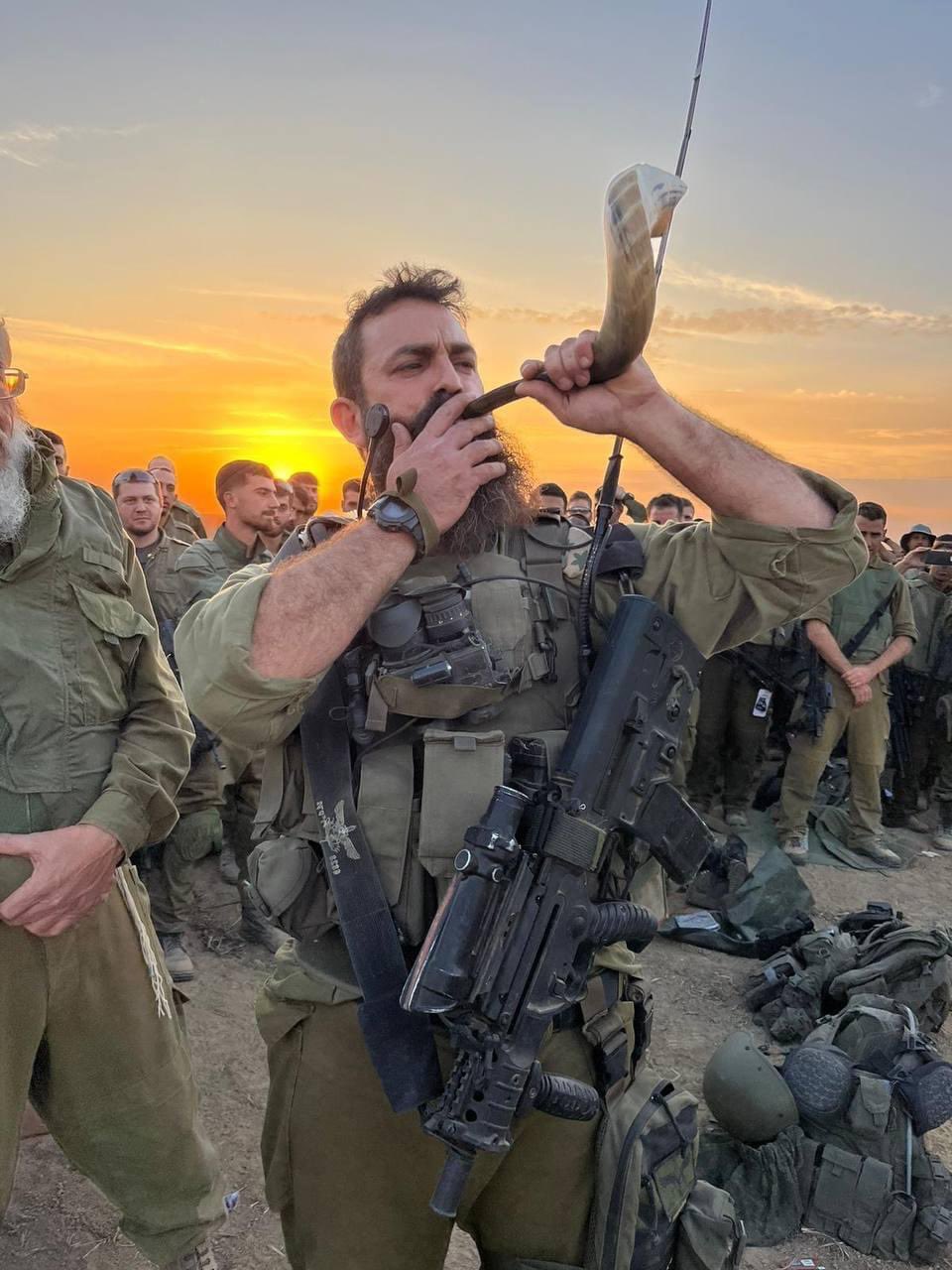
Following the launch of Israel’s Operation Am K’Lavi—a bold preemptive strike against Iranian military and nuclear targets—Jewish communities worldwide found themselves seeking to understand this pivotal moment through the lens of Torah. There are rare moments in history when silence becomes both irresponsible and a missed opportunity—times when failing to address what is unfolding around us risks spiritual disconnection and neglects the responsibility to understand contemporary events through Torah wisdom. The significance and weight of such events demand a spiritual response, one that can be found in Parshat Beha’aloscha and its teaching about the chatzrotzros, the silver trumpets.
The chatzrotzros described in this past week’s parsha offer precisely such a framework, providing insight into how Jews should respond to pivotal moments in history.
The Torah outlines four distinct situations when these trumpets must be sounded:
1. For Communal Assembly
עשה לך שתי חצצרות כסף והיו לך למקרא העדה
“Make for yourself two silver trumpets and they shall be for you to call the congregation” (Bamidbar 10:2)
2. For Mobilizing the Camps to Travel
ולמסע את המחנות
“and for the journeying of the camps” (Bamidbar 10:2)
3. For War and Distress
וכי תבאו מלחמה בארצכם על הצר הצרר אתכם והרעתם בחצצרות ונזכרתם לפני ה’ אלקיכם ונושעתם מאיביכם
“When you go to war in your land against an adversary who oppresses you, you shall sound short blasts on the trumpets, and you shall be remembered before Hashem your Hashem, and you shall be saved from your enemies” (Bamidbar 10:9)
4. For Joy and Celebration
וביום שמחתכם ותקעתם בחצצרות והיו לכם לזכרון לפני אלקיכם
“On your joyous occasions you shall sound the trumpets and they shall be a reminder for you before your Hashem” (Bamidbar 10:10)
These four categories encompass the full spectrum of human experience: daily function, transition, crisis, and celebration. In each situation, the Torah instructs the sounding of chatzrotzros—an alarm that awakens religious awareness and connection.
It seems to me that this consistency reveals the deeper purpose of the trumpets: they are designed to redirect consciousness toward Hashem at every moment of life. Whether gathering for routine communal business, embarking on a journey, facing mortal danger, or celebrating joyous occasions, the chatzotzrot serve as a spiritual reset button—a divine interruption that pulls humanity back from the autopilot of daily existence.
In times of war and distress, this divine redirection becomes especially crucial. The Rambam explains that the purpose of sounding the alarm during crisis is fundamentally about maintaining connection to Hashem:
דבר זה מדרכי התשובה הוא בזמן שתבא צרה ויזעקו עליה ויריעו ידעו הכל שבגלל מעשיהם הרעים הורע להן אבל אם לא יזעקו ולא יריעו אלא יאמרו דבר זה ממנהג העולם הרי זו דרך אכזריות
“This is part of the ways of repentance. When trouble comes and they cry out over it and sound the alarm, everyone will know that because of their evil deeds, evil has come upon them. But if they do not cry out and do not sound the alarm but instead say ‘this is just the way of the world’ this is a path of cruelty” (Hilchos Ta’anis 1:1-3)
The Rambam warns that treating crisis as mere coincidence—attributing events to random chance or natural causation alone—is derech achzariyus, a form of cruelty. The cruelty lies not just in ignoring suffering, but in allowing drift into a godless worldview where events have no spiritual meaning.
When failing to sound the trumpets in times of crisis, there is risk of losing sight of divine providence entirely. This leads to seeing oneself as an autonomous actor in a random universe rather than a participant in a divinely orchestrated story. The chatzrotzros in times of distress serve as a lifeline back to spiritual awareness—a reminder that even the darkest moments are opportunities to recognize Hashem’s presence and relationship with the Divine.
This teaching challenges the common misconception reflected in the phrase “All we can do is pray,” as if prayer were a last resort after all practical options are exhausted. Such thinking reveals how divine connection has been unconsciously relegated to the margins of life.
Prayer is not a fallback—it’s recognition that Hashem is present in every moment, crisis and calm alike. It represents the primary relationship with reality itself. Prayer doesn’t compete with practical action; it transforms understanding of what practical action means.
The Jewish response to uncertainty, fear, and hope is through teshuvah, tefillah, u’tzedakah (repentance, prayer, and charity). This is the modern sounding of the chatzrotzros—the contemporary way of redirecting consciousness toward the Divine presence that underlies all circumstances.
Just as the ancient trumpets called ancestors to awareness in every situation, these spiritual practices serve as wake-up calls, ensuring that no experience—whether mundane or dramatic—passes without the opportunity to recognize Hashem’s hand in human affairs.
Though silver trumpets are no longer physically blown, their spiritual pattern of divine redirection continues in every category of human experience. The chatzotzrot are sounded not only during national crises but in personal battles too—job loss, illness, family struggles. Life transitions, personal challenges, communal celebrations—all are moments that demand looking upward and recognizing that these experiences are not navigated alone.
The genius of the chatzrotzros system is that it trains recognition of Hashem in the ordinary as much as the extraordinary. A community meeting is not just bureaucracy—it’s an opportunity to recognize divine guidance in collective decision-making. A journey is not just logistics—it’s a chance to acknowledge that steps are directed by providence. A celebration is not just personal achievement—it’s recognition that joys flow from divine blessing.
This constant redirection toward Hashem prevents what might be called “spiritual compartmentalization”—the modern tendency to reserve religious consciousness for synagogue while treating the rest of life as secular. The trumpets insist that there is no secular realm, only varying degrees of awareness of Hashem’s presence.
A Vision of Unfolding Redemption
Although Tishrei is still months away, it seems like the right time to call attention to the prayers of Malchuyot, which speak to this moment with startling relevance:
ובכן תן פחדך ה’ אלהינו על כל מעשיך ואימתך על כל מה שבראת וייראוך כל המעשים
“Therefore, place Your awe, Hashem our Hashem, upon all Your works and Your dread upon all that You have created, so that all works will revere You”
ובכן תן כבוד ה’ לעמך תהלה ליראיך ותקוה טובה לדורשיך ופתחון פה למיחלים לך
“Therefore, grant honor, Hashem, to Your people, praise to those who revere You, good hope to those who seek You, and confident speech to those who await You”
ועולתה תקפץ פיה וכל הרשעה כלה כעשן תכלה כי תעביר ממשלת זדון מן הארץ
“Iniquity will shut its mouth, and all wickedness will vanish like smoke, when You remove the dominion of evil from the earth”
וידע כל פעול כי אתה פעלתו ויבין כל יצור כי אתה יצרתו ויאמר כל אשר נשמה באפו ה’ אלוקי ישראל מלך ומלכותו בכל משלה
“Every creature will know that You created it, every formed being will understand that You formed it, and everything with breath in its nostrils will say: Hashem, Hashem of Israel, is King, and His sovereignty rules over all”
These are not distant aspirations but descriptions of a process already underway. What unfolds before our eyes appears to be precisely this divine transformation in action.
The current moment reflects the gradual fulfillment of the vision articulated in our most sacred prayers. Evil regimes that seemed unshakeable find their foundations crumbling as ומעביר ממשלות זדון מן הארץ – “and removes evil kingdoms from the earth” – manifests before our eyes. Authoritarian powers that once operated with impunity in shadows are being exposed and confronted by forces they cannot comprehend or control.
Simultaneously, the world is beginning to recognize what it long refused to see: the significance of the Jewish people and the Jewish state. Where once Israel stood isolated and misunderstood, increasingly there is acknowledgment of its role as a force for justice and moral clarity in a chaotic world. This recognition comes not through Jewish self-promotion but through the inexorable workings of truth itself.
The Jewish people’s capacity for self-defense continues to strengthen, both militarily and morally. Where once Jews were passive victims of history, they now serve as active agents of divine transformation—not through domination, but through the modeling of righteousness in the face of evil. This evolution represents more than mere political or military success; it suggests the fulfillment of the ancient promise that righteousness will ultimately prevail.
Marching Toward Redemption
This is not passive waiting for some distant messianic age. This is active participation in redemption’s unfolding. Each moment of moral clarity, each act of justified defense, each choice to respond to crisis through spiritual awareness rather than purely secular calculation contributes to the steady march toward the perfection of the world under divine sovereignty.
The strength Israel demonstrates is not merely military but moral—the strength to act with precision and purpose while maintaining ethical boundaries that distinguish it from its enemies. This distinction becomes increasingly apparent to a watching world, as the contrast between forces of construction and destruction grows ever sharper.
The trumpets continue to sound, calling attention to this unfolding transformation. They remind us that current events are not random occurrences but chapters in the larger narrative of cosmic redemption. Each day brings new evidence of evil’s exposure and righteousness’s ascendancy. Each act of Jewish strength and moral clarity serves not merely Jewish interests but the interests of a world that desperately needs examples of how divine will can be actualized through human agency.
We witness the gradual materialization of the Aleinu vision: וכל בני בשר יקראו בשמך “and all flesh shall call upon Your name.” Not through coercion but through recognition. Not through conquest but through the irresistible power of truth revealing itself in history.
I do not presume to be able to interpret these events through any semblance of a prophetic lens, but still we must pay attention as these events unfold. In our prayers, we speak of צמיחת קרן—the sprouting of the horn—a metaphor used by Chazal to describe the gradual emergence of the מלך המשיח and the unfolding of the Messianic age. It is a process similar to that of the growth of a tree: imperceptible in real time, yet clearly observable in hindsight.
The Jewish people’s evolution from powerless victims to confident defenders represents more than a political transformation—it embodies the theological truth that evil cannot ultimately triumph over good, that falsehood cannot permanently obscure truth, that those who align themselves with divine purpose will find strength beyond their own.
This moment calls for recognition that we stand not at the beginning of some distant redemptive process, but well along the path of its fulfillment. The work of perfecting the world continues, but the trajectory is clear, the momentum building, the vision crystallizing into reality before our eyes.
The Continuing Call
The message of the chatzrotzros—those silver trumpets that summoned the people to attention in war and peace, sorrow and joy—remains eternally relevant. They called not only to action but to awareness.
That call hasn’t been silenced; it sounds differently now. Today it may come through prayer, renewed commitments, conversations with children, or quiet resolve to hold steady in the face of uncertainty.
The work of awakening the world is not finished. But perhaps it has already begun in ways more profound than can yet be fully comprehended. Each generation contributes its part to the larger project of revealing divine truth through human history.
May there be careful listening. May there be faithful response. And may this generation be privileged to participate in a story that continues to unfold with dignity, purpose, and ultimate redemption.
May we merit to witness speedily the גאולה שלמה ואמיתית, the complete and true redemption, when all the world will recognize the sovereignty of the Almighty, and the ancient promise will be fulfilled: ה’ אלוקי ישראל מלך ומלכותו בכל משלה—Hashem, God of Israel, is King, and His sovereignty rules over all.
This essay is adapted from a derasha given at Congregation Beth Aaron, Parshas Beha’aloscha, 5785.