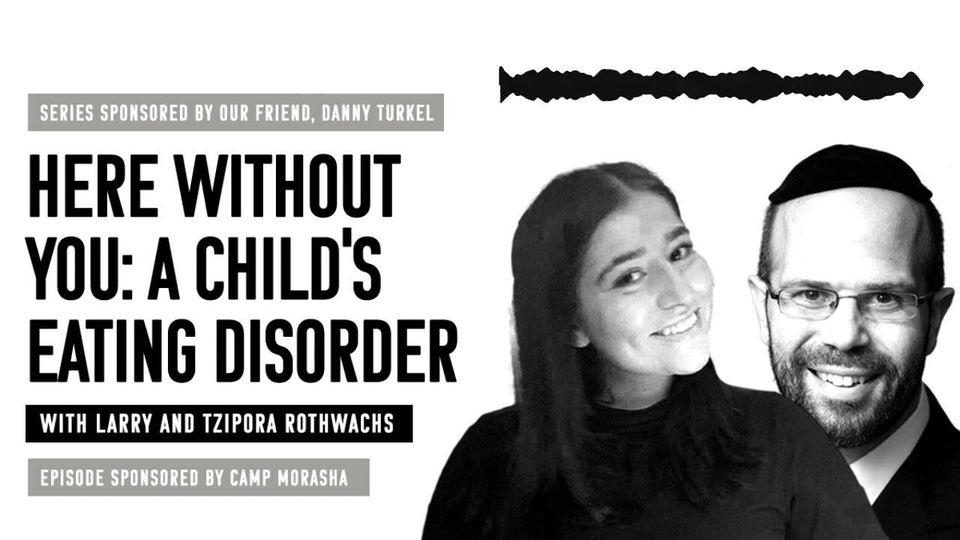
An Interview with Rabbi Larry Rothwachs (reprinted with permission of Mizrachi magazine)
This past February, Rabbi Larry Rothwachs wrote to his community in Teaneck, New Jersey that he would be making Aliyah over the next few years to build a new community in Israel. A leading pulpit rabbi in America for over 20 years, he is currently the Rabbi of Beth Aaron in Teaneck, NJ, the Director of Professional Rabbinics at RIETS, and a licensed social worker. Rabbi Aron White spoke with Rabbi Rothwachs to hear more about the vision for his new community and the future of religious Aliyah.
When did your dream of Aliyah begin, and what made you decide to take this step now?
My wife and I both considered Aliyah when we were newly married and planning our future together. However, as our professional careers evolved, first in Jewish education and then in the rabbinate, we ultimately concluded that remaining in the US was the most appropriate choice for our family. We recently announced that we hope to make Aliyah in a few years. While there is certainly some personal motivation involved – two of our children are living in Eretz Yisrael and a third has plans to do so soon – we have decided to move in this direction at this time, as we have been offered an opportunity to spearhead a new community in Israel.
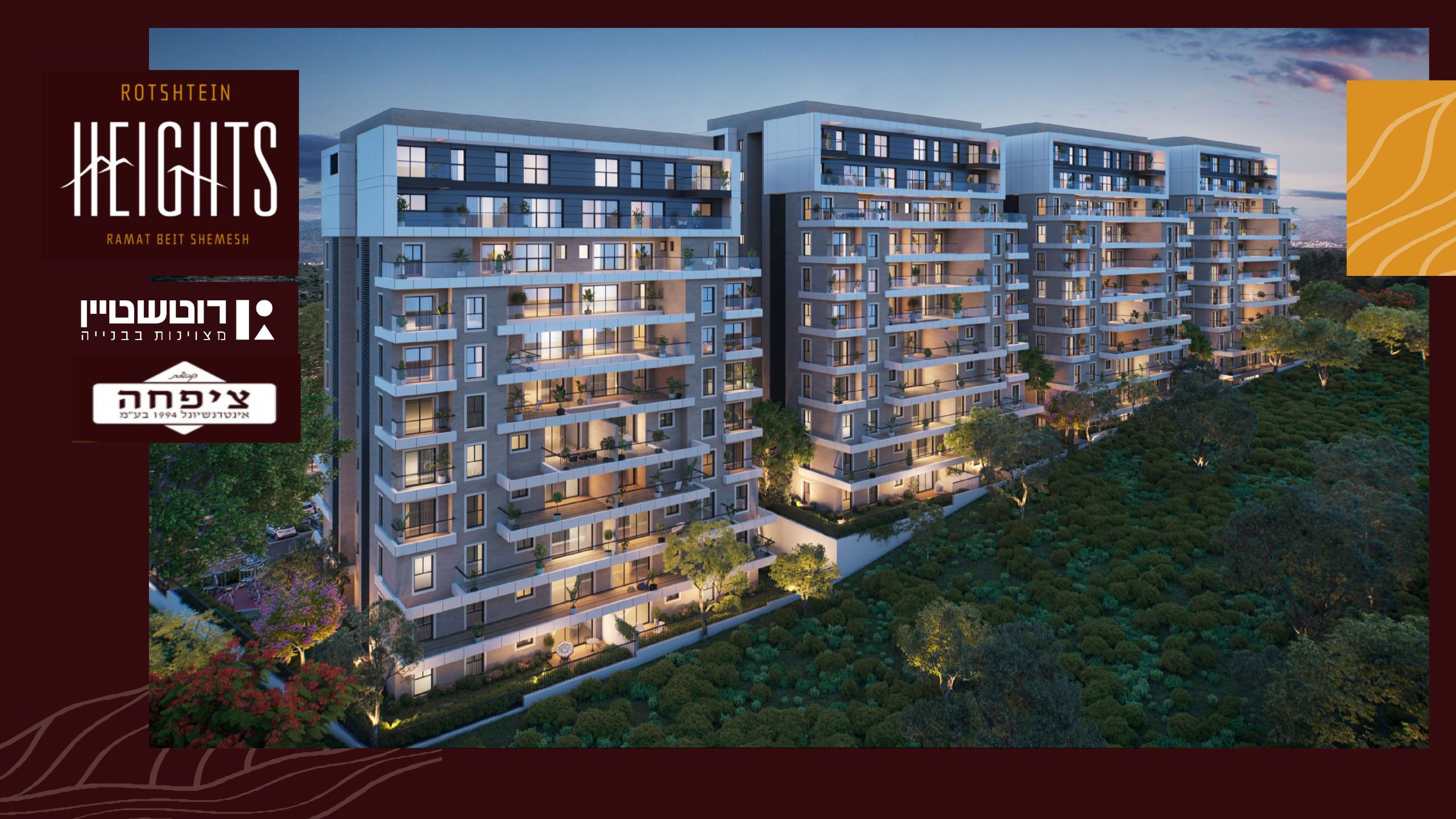
We were approached by representatives of the Rotshtein Company, well-known developers, who are building a new project in Ramat Beit Shemesh called Rotshtein Heights. They had a vision to create an Anglo community from the ground up and enlist the support of an American rabbi to encourage a broad base of prospective olim to join in establishing this community. The beautiful neighborhood that has been planned and is currently being developed, includes 1,300 residential units, schools, shuls, parks and commercial areas. We have been incredibly impressed with the dedicated vision of the principal parties and with the quality and thoughtfulness of their planning and implementation.
What are your plans for the Rotshtein Heights community?
My vision for our new community, which will be called Meromei Shemesh (מְרוֹמֵי שֶׁמֶשׁ), has been shaped and inspired by my experience of over two decades in the rabbinate. During the years that I have been privileged to serve as the rabbi of Congregation Beth Aaron in Teaneck, I’ve had the good fortune (and, in other respects, the challenge) of witnessing 20% of our shul make Aliyah. While none of them have reported that they regretted their move, many have shared that they miss various aspects of communal life in America. Although this may mean different things to different people, many have expressed that they miss belonging to a community with a shul at its core, serving as the center of their spiritual and social lives. While I am sure there are exceptions, many have expressed that they feel that the shul experience in Israel is not the same as the American model. Many American Jews are fortunate that their shul provides them with a social, spiritual, and educational infrastructure. They appreciate the value of living and growing within a multigenerational kehillah; one that provides a range of programming and opportunities, from an active youth department to meaningful programs for retirees. To be clear, I am not attempting to transplant my shul, or any shul for that matter, but I believe that members of my shul and the broader American community, as well as many people looking for a community in Israel, will gravitate towards this vision. Our community here in Teaneck speaks to many people, and I am excited at the prospect of being able to assist in the creation of a similar home for people in Israel.
Another innovative feature of our budding community is that there will be a designated and structured space for a shul, available to our new residents from the first moments that they settle in their homes. While it will understandably take time for the full construction of the shuls and schools which will hopefully populate the area, the developer has generously designated commercial space for the use of a shul, for as long as it is needed. Conversations and planning with municipal leaders have already begun, allowing for the creation and strengthening of important and strategic relationships. It is incredibly exciting to see a community begin to take form and develop, even as the project is still under construction.
You mentioned the difference between communities in Israel and the Diaspora, which is something many olim struggle with. How can more Diaspora-style communities flourish in Israel?
It would be presumptuous of me to attempt to answer this question, as I have yet to settle in Israel myself. That being said, you have challenged me with this question, and I will share a few thoughts. On the surface, it seems somewhat ironic that some have reported difficulty in building shul-based communities in Israel. While there may be many reasons for this challenge, it is worth noting at least one difference between communities in Israel and America – the relationship between religion and state. In America, the separation of religion and state means all of our Jewish communal institutions – schools, shuls, and mikvaot – are private initiatives built by the community. In Israel, it is the government that provides many of these services. The Misrad HaChinuch (Ministry of Education) builds the schools, the Iriya (local municipality) builds the preschools, and the Misrad LeSherutei Dat (the Ministry for Religious Services) builds the mikvah. The community is tasked with one primary responsibility: to build a shul. While one would think these incredible benefits would make it easier to galvanize resources and enlist dedicated communal support, it is possible that it is precisely because the government is so involved, that a different type of culture evolves. Whereas Diaspora Jews know that they have no choice but to collaborate in the creation and development of their entire communal infrastructure, Israeli communities often rely on the wealth of government resources that assist them in their growth and development. While there is no question that these benefits constitute an incredible blessing which should not be taken for granted, they may also contribute to a vacuum, with community members feeling less engaged, motivated, and incentivized. Many of the people who make Aliyah spent decades giving of their time and resources to their Diaspora communities. However, in Israel, some do not succeed in finding similar outlets for this type of communal involvement. I am hoping that we will be able to offer our community members opportunities that they may be seeking to make their mark and to contribute through Torah, chessed, communal involvement and more.
This past January, I enjoyed the privilege of meeting the new Minister of Aliyah and Absorption, Ofir Sofer, together with several colleagues from America. I was incredibly impressed with the minister, a sincere and genuinely humble individual who expressed interest in learning more about how Israel can help facilitate American Aliyah. He has plans to visit our community in Teaneck in the coming weeks to learn more about American communities and how the Ministry of Aliyah and Absorption could do more to support prospective and current olim.
There is no question that it is fascinating to navigate the various channels and pathways of community building in Israel. As I mentioned, the environment is different from what we are familiar with in America. At the same time, this is part of what it means to function as a Jewish state. The Torah itself envisions different and overlapping roles within structured communal leadership: malchut (government), nevuah (prophecy), and kehunah (religious leadership), or three unique zones of leadership, necessitating a blend of political and spiritual leadership. It seems that this is part of life in our renewed Jewish state.
Many Jews in the Diaspora are blessed to live rich spiritual lives in strong communities. How can people in this situation keep the dream of Aliyah alive?
There is no question we have built strong Diaspora communities that are rich in Torah observance. But our religious observance should make it obvious to us that we are not meant to be in chutz laAretz. It is true that on some level, we have everything we “need” in the Diaspora. But almost a third of our shemoneh esrei is about our return to Israel – the ingathering of the exiles, the restoration of judges, the building of Yerushalayim, the arrival of Mashiach. It is true that in respect to certain short-term needs we have created opportunities for a rich Jewish life for individuals and communities in exile. But as a people, if we take what we say seriously, then we must acknowledge that our eventual return to Eretz Yisrael is literally what we pray for three times a day.
For over 20 years, I have shared with the members of my community that as individuals and families, Aliyah is a personal choice and must be respected as such. There are many different factors that are relevant to the question as to whether one should make Aliyah, and, if so, when. This reality must be met with respect and individuals who choose to live outside of Israel should be supported and their personal choice validated. Nobody should be made to feel guilty for living in the Diaspora. But as a community and as a people, we must hold ourselves to a different standard. From a national perspective, there is great value in promoting Aliyah and I believe that rabbis in the Diaspora should be clear and unapologetic in their messaging. There should be no discomfort, nor hesitancy, in proclaiming the message that the future of the Jewish people is in Eretz Yisrael, and thus, as a community, we should be able to plan passionately and, when appropriate, self-reflect critically. We must be willing to acknowledge and wrestle with the reality that despite the fact that we have a thriving State of Israel, the Aliyah rate from America is still close to 0%! How can we take ourselves seriously if we say for generations that we want to return to the Land, but don’t take the opportunity when it presents itself?!
There is another difference between life in the Diaspora and in Eretz Yisrael, that bears mentioning in the context of this conversation. In the Diaspora, our focus is on preservation and survival. Our primary objective is (and should be) to protect ourselves from assimilation, the most extreme manifestation of which is intermarriage. We must also contend with more subtle expressions of assimilation, and cultural indoctrination. In the Diaspora, we focus on preserving the integrity of our heritage. Community development in the Land of Israel has somewhat of a different focus. The model shifts from one of preservation and survival to one of building and developing the infrastructure of our future. In a certain sense, we have “arrived.” The miraculous events of the past 75 years represent the unfolding of a vision that was foretold many centuries ago by our prophets. Jewish life in Israel is not focused on preservation, but rather realizing and actualizing our nation’s ultimate destiny.
There was a time in history when the State of Israel served as a haven for thousands of Jews who were seeking refuge from death and persecution. And, for Jews in some places in the world, it still is. In his monumental essay, “Kol Dodi Dofek,” Rav Soloveitchik zt”l listed the miracles of modern Israel, and taught that the sixth miracle (“knock”) was that Jews now have a safe haven and can escape persecution. Despite the alarming rise in antisemitism in the United States and around the world, we do not seem to be at a point where people feel that they need to run and escape.
Nevertheless, our goal should be to run to Israel, not merely to run away from where we are. Rabbi Yissachar Teichtal hy”d, the famous author of Eim Habanim Semeichah, shares a beautiful vort. We read in Shir HaShirim: מָשְׁכֵנִי אַחֲרֶיךָ נָּרוּצָה, “pull us towards you and we will run” (Shir HaShirim 1:4). In halacha, there is a legal transaction called “meshicha” which allows you to take ownership of something. There are two ways of performing a kinyan meshicha when acquiring an animal. A person can call an animal so that it follows his command or, alternatively, the one who is seeking acquisition can hit the animal, causing it to run ahead. According to Rabbi Teichtal, this verse is saying – “Hashem, acquire us, pull us towards You through a kinyan meshicha – but let it be the kind of meshicha where You call us and we run to You, rather than us being hit and having to flee!”
What is your elevator pitch for your future community?
We are looking to establish a community that is growth oriented. Aliyah means ascent, which is, of course, geographical, but is also intended to reflect a process of spiritual growth. Although I have not yet taken permanent residence in Israel, I have been fortunate to lead a community of “bnei Aliyah,” of people who are growing. Our goal in Meromei Shemesh is to create an environment that is conducive to growth as individuals, as families, and as a community. At times, we encounter a lot of pain and confusion in life and in the world. There are many families that are disjointed and relationships in need of repair. As part of my mission as a rav and as a teacher and in my role as a mental health professional, I have tried, in some small measure, to assist some in healing some of those wounds. This is a core Torah value. If people are looking for that kind of community, I believe they will find it in Meromei Shemesh at Rotshtein Heights. Another feature of the Teaneck community of which I am quite proud, is the sense of peace and harmony within the broader community. I hope and pray that we will be zocheh to build a community that has similar aspirations and achievements.
Aloh Na’aleh!
For more info re this project, please contact David Wiener at 718-207-6766 (US) or Avi Nefoussi at +972 52-400-5893 (Israel).