Families don’t suffer from addiction – individuals do.
Schools don’t struggle with addiction – students do.
Shuls are not plagued by addiction – congregants are.
Communities are not affected by addiction – members are.
Or so, it seems, some of us believe. In preparation for the upcoming community education event on November 4th at Keter Torah, the public was given the opportunity to submit anonymous questions to various experts and communal leaders regarding substance abuse and addiction. The evening will be dedicated to the panelists discussing and addressing these questions.
There were quite a number of questions about how one can tell if someone is using drugs, or how one can help someone suffering from addiction. Many other questions indicate a deep concern about the accessibility of drugs, the risks of vaping, juuling, or even prescription medications. Many of the questions reflect a true desire to understand more about these issues and how they impact us as a community, seeking ways to address and prevent.
There were a few questions, however, that followed a common theme which I wish to directly address. Some individuals questioned the very assumption that it is the responsibility of the local community to deal with substance abuse issues. Others wondered why should schools or shuls should take any responsibility to deal with individuals struggling with addiction. To be clear from the outset, I respect these questions and genuinely appreciate that some are seeking clarification as to our roles as community members.
Firstly, as members of a community, we should always seek ways to support and display concern for one another. We understand that, when one of us suffers, we suffer as a whole. This is true even if the suffering is limited to a small group of people. We run for diabetes, walk for cancer, ride for autism, and raise money for all sorts of causes and struggles that we may not have a personal connection to. Would anyone suggest that Friendship Circle, Chai Lifeline, Sharsheret or any of the many wonderful organizations in our midst should shift their attention to issues that directly affect every individual within our community? Of course not. While it is true that we can state that the entire community, thank G-d, is not suffering from cancer, we are proud that so many people devotedly raise awareness and money to support those who are unfortunately ill.
An additional benefit to raising awareness and education about this issue is the impact it has by allowing people to talk more openly about substance use and addiction and to know that others care about their suffering. It signifies acceptance and recognition that their pain is real and that others want to help. If I open a carton of eggs during October and each egg is stamped with a pink ribbon, I am reminded that it is OK to talk and think about cancer. And if addiction is a community problem, if we have gatherings and demonstrate our support, we are sending a message to those struggling and to their families that this is a problem we all care about.
The reality is substance abuse and addiction affect numerous members of our community. This is not a myth, nor a hunch. There is now a support group that regularly meets to support the family members of loved ones suffering from an addiction that is well-attended, from what I am told. There are members of shuls who have come forward to ask for help. Take that number, whatever it may be, and multiply it because, for every person who has come forward on his/her own behalf or to help a loved one, I can guarantee you there are many more who suffer in silence.
Despite our best efforts to establish a grounded, supportive and, in some respects, an insular community, we are not immune to this threat and we know that it is growing. We have been raised and taught to help our fellow man, to be sensitive to the suffering around us, and be active in addressing the struggles and challenges others may be facing. It is easier to distance oneself from issues that one believes do not present a risk to himself, nor others he knows. Yet, the harsh reality is that we are all at risk, adults and children alike, and it is incumbent upon each of us to raise the issue to the same height of caring and attention that we pay to other communal issues. Not only is it critical to ask the questions that have been asked about how to detect substance abuse, how to prevent it, and how to treat it. It is equally important to ask to learn about how to become more sensitive and supportive to those who are suffering and to seek guidance as to how to convey proper understanding and genuine acceptance.
I conclude by sharing an email (shared with permission) that I received following the awareness event on substance use and addiction, hosted by our community this past April. I hope it will touch you the way it touched me.
Dear Rabbi Rothwachs,
I want to thank you for your participation in last week’s event on addiction. I am especially grateful that you publicly stated that it is the responsibility of rabbis to lead the community and reach out to those who are struggling with addiction and offer spiritual guidance and emotional support. I am most appreciative because until this event, I did not feel as if I could approach my rabbi. You see, I have been struggling with an opioid addiction for the past several years. Never in a million years would I or anyone who knows me ever have imagined that I would be an addict. I never got drunk in my life (I don’t even like alcohol) nor did I ever smoke marijuana, not even once. My addiction began as I innocently experimented with a stimulant drug, prescribed for one of my children. It’s a long and complicated story but suffice it to say that this “innocent” experiment triggered a series of events which has profoundly threatened my marriage and continues to strain all of my relationships. My husband has been supportive throughout this ordeal but we do feel very alone in this struggle.
Until last week’s event, I did not know if I could approach my rabbi. It is not because I feel that he is in any way insensitive. I have approached him numerous times over the course of many years on sensitive issues. He has displayed sensitivity and understanding and has spoken from the pulpit many times about the need to break the stigma around mental health and other social issues. His public lectures and private discussions have demonstrated that he has an understanding about how complex these issues are. Yet for reasons that I cannot properly explain I felt that I could not approach him. I assumed that I would be unfairly judged and incorrectly labeled. I was just too afraid to cross that line. Obviously once a congregant tells her rabbi that she is an addict, there is no taking that back.
But your words the other night have given me the courage to take this leap and reach out to my rabbi. I am hoping that in doing so, he can support me, my husband and my children. I am hoping that he will have some thoughts which may be inspiring and some suggestions which may be helpful. But most of all, I am hoping that I will feel a little more connected to the community from which I feel so distant at the moment. I am hoping that taking this small step forward, will constitute a step towards my complete and everlasting recovery.
There is no need to follow up with me. You will be hearing from me again soon because you Rabbi Rothwachs are my rabbi.
With much appreciation,
A grateful congregant of yours
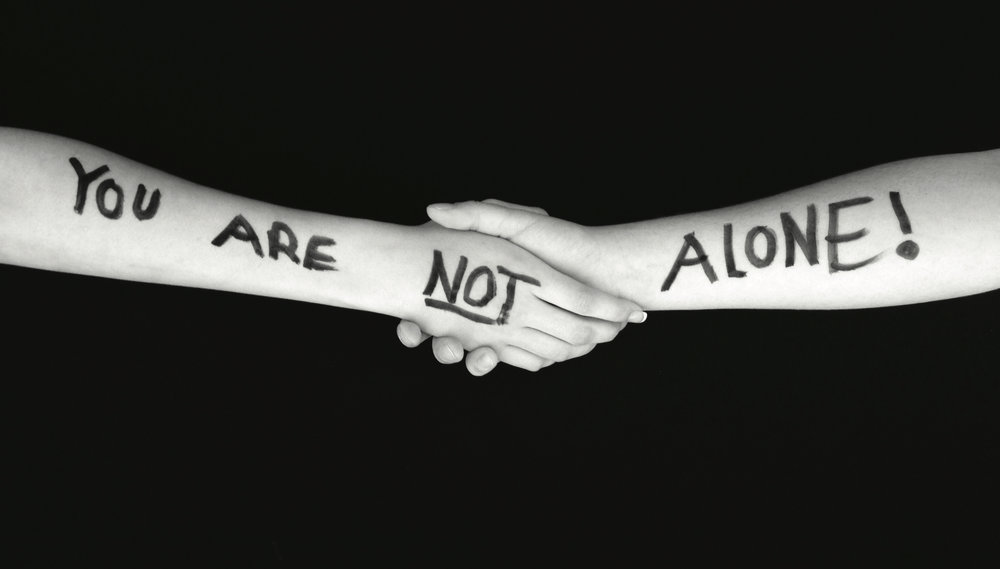
No one in our community should ever feel alone. Our community’s continued conversation on substance abuse and addiction sends a very clear message to anyone suffering from addiction or to anyone trying to support one who is. You are not alone. We do not judge you. We understand that you did not choose this illness. We believe in your ability to overcome this challenge. More than anything though, we want to help you get there. Because no one should ever have to suffer alone.