

Do Not Disturb: The Sweet Sleep That Shaped Shavuos

Every year, as Shavuos approaches, Jews around the world prepare to stay up through the night in anticipation of receiving the Torah anew. For some, the late-night learning is a highlight of the Jewish calendar — a time of community, excitement, and spiritual renewal. For others, especially this year, the custom feels more challenging. The energy of a bustling beis midrash is hard to replicate in solitude. The snacks, the songs, the sense of occasion — they’re not as readily available when we’re on our own.

And yet, perhaps this moment presents a hidden opportunity. Because Shavuos, and in particular the minhag of staying up through the night, invites us to reflect on something much deeper than collective momentum. It invites us to ask not just “How can I stay up?” but “Why do we stay up?” And in that question lies a profound, and often misunderstood, spiritual insight.

The Custom, Not the Obligation

The first thing to clarify is that staying up all night on Shavuos is not a halachic obligation, found neither in the Gemara nor in Shulchan Aruch. The Magen Avraham, a classic commentary on the Shulchan Aruch, cites a passage in the Zohar that praises the practice of the “early chassidim” — not Chassidim in the modern sense, but deeply devout Jews of earlier generations — who stayed awake the night before Matan Torah to study Torah. That’s where the custom begins.

But why did they do this? The Magen Avraham offers a fascinating and somewhat unsettling answer: because Bnei Yisrael slept in on the morning of Matan Torah. According to the Midrash, Hashem had to wake them up for the most important moment in human history. Our nighttime learning, then, is framed as a tikkun — a correction or repair — for that ancient spiritual misstep.

But what really happened that night? Why did the generation of the Exodus, who had crossed the sea and seen open miracles, go to bed — and more astonishingly, oversleep — on the eve of revelation?

Sleep or Surrender?

The Midrash in Shir HaShirim Rabbah brings a startling metaphor. It likens Bnei Yisrael’s sleep to a woman who hears her beloved knocking but is reluctant to get out of bed. “I’ve already taken off my robe,” she says. “I’ve washed my feet. Must I rise again?” It’s a metaphor of intimacy, hesitation, vulnerability — and missed opportunity.

Even more curious is the Midrash’s comment that “שינת עצרת ערבה” — the sleep of Shavuos night was sweet, pleasant, almost irresistible. Why would the Midrash describe this sleep, of all nights, as particularly sweet? Shouldn’t it have been restless, electric with anticipation?

To unpack this paradox, we turn to the brilliant insight of Rav Chaim Yaakov Goldvicht z”l, the founding Rosh Yeshiva of Kerem B’Yavneh. In his Asufas Ma’arachos, Rav Goldvicht z”l re-reads this entire episode with a radically different lens.

The Case for Sleeping

According to Rav Goldvicht z”l, the sleep of Bnei Yisrael on that night wasn’t laziness. It wasn’t forgetfulness. It was a deliberate spiritual choice — and not an illogical one.

To understand it, we must consider a deeper idea in Chazal. The Gemara in Niddah famously states that a fetus in the womb is taught the entire Torah. When it emerges into the world, an angel touches its lips and all is forgotten. The Maharal explains that this isn’t just a poetic image. It reflects a spiritual truth: before birth, when the soul is not yet fully encased in the limitations of the body, it is uniquely attuned to Torah. Once it enters the physical world, the clarity vanishes — and the struggle begins.

This is part of a larger pattern. In this world, our souls are weighed down by our physical selves. There is tension between guf and neshamah, body and soul. Our task in life is to bring them into harmony. But the highest spiritual clarity — the unfiltered reception of truth — comes when the soul is partially free from the body.

That’s where sleep enters the picture.

Dreams, Prophecy, and Spiritual Bandwidth

Chazal refer to sleep as 1/60th of death. That’s not to scare us — it’s to point out that sleep represents a partial disengagement from the physical. When we sleep, our souls rise slightly, as if antenna are being raised, picking up spiritual signals we miss during the day. That’s why dreams can sometimes carry significance. That’s why, even in prophecy, most nevi’im received their visions in a dream-like state, semi-conscious and suspended between worlds.

Only Moshe Rabbeinu, the Torah tells us, received nevuah fully awake. He alone could experience the word of Hashem with open eyes, in full awareness. The Rambam underscores this in Hilchos Yesodei HaTorah: all other prophets dreamed; Moshe heard directly, face-to-face.

Except, remarkably, for one other moment.

At Har Sinai, the entire nation heard the voice of Hashem — “פנים בפנים דיבר ה׳ עמכם.” It was, by all accounts, a one-time exception to the rule. Every man, woman, and child reached the level of nevuah usually reserved for Moshe alone.

Bnei Yisrael’s Miscalculation

And now we return to Shavuos night. Rav Goldvicht z”l suggests that Bnei Yisrael, anticipating this overwhelming revelation, assumed it could only be experienced through a soul-based state. They believed that to receive the Torah — the deepest spiritual truth — they would have to sleep. Or at least prepare themselves through that same suspended state. After all, sleep is when the soul is most free, most receptive.

So they went to sleep.

It wasn’t negligence. It was a spiritual strategy.

They just got it wrong.

Because Hashem didn’t want them asleep. He wanted them awake. This was not to be a passive reception of divine truth, but a shared venture — a conscious partnership between heaven and earth, body and soul. He wanted us alert, trembling, hearts pounding, standing at attention. He wanted the Torah received not only by the soul, but through the body as well. A Torah that lives in the real world, not just the ideal one.

So He came early. He sounded the shofar. He woke them up.

The Night We Recharge

Rav Goldvicht z”l goes even further. He writes that sleep itself — every night — is a chance to receive shefa chaim, an influx of spiritual vitality. Just as we plug in our phones at night to recharge, so too our souls draw energy while we sleep. And perhaps that’s why the Midrash calls the sleep of Shavuos “sweet.” Because there is something real happening in the soul’s night journey. But that journey can’t replace waking commitment. It must fuel it.

On Shavuos, then, we don’t stay up as punishment. We stay up to signal that we are present. We are ready. We are here, in our bodies, in our limitations, but open to transcendence. We stay up not because we’re proving something, but because we are partnering with Hashem.

An Invitation, Not an Obligation

And so, as we approach Shavuos — whether or not we manage to stay up all night — let us approach the day with awareness. Whether we learn for one hour or ten, whether in a room full of people or by ourselves, the opportunity is the same.

To receive the Torah again. To feel that same partnership of body and soul. To accept not only the words of Hashem, but the invitation to bring those words into a complicated, imperfect, beautiful world.

Let’s remember that when we learn Torah, we aren’t just acquiring knowledge. We’re reconnecting to the Torah we once knew, before we were born. We are opening ourselves to an ongoing, eternal dialogue — פנים אל פנים — face to face, as much as our limited bodies allow.

This is why we stayed up all night. And why, in some form or another, we always will.
Lag B’Omer, Hostages, and the Unbroken Spirit of a People

“There is a crack in everything. That’s how the light gets in.” — Leonard Cohen

Rabbi Akiva’s Rebuilding: The Heart of Lag B’Omer

There is a profound paradox at the heart of Jewish history: collapse often precedes breakthrough. Lag B’Omer, which begins this Thursday night and marks the 33rd day of the Omer, represents such a moment. It commemorates the end of a plague that killed 24,000 students of Rabbi Akiva. But more than that, it honors what came next – a decision to rebuild in the face of devastation. It is a day not only of mourning interrupted, but of renewal awakened.

Imagine pouring your life into 24,000 students, only to lose them all in just over a month. That was Rabbi Akiva’s reality. He had begun Torah study at 40, built an academy that changed the world, and then watched it collapse. What followed is what we remember on Lag B’Omer – not just the end of death, but the rebirth of hope.

The Gemara (Yevamot 62b) tells us: “Rabbi Akiva had twelve thousand pairs of students… and all of them died in one period because they did not treat each other with respect.” The Meiri adds: “There is a tradition from the Geonim that on the 33rd day of the Omer, the deaths stopped.”

The Pri Chadash offers a well-known explanation: that the joy of Lag B’Omer does not stem from the mere cessation of the plague—since by then, nearly all of the students had already perished—but from the beginning of something new. He suggests that perhaps the celebration is for the next chapter: for the few students Rabbi Akiva taught afterward, who did not perish like the others.

Still, the Pri Chadash’s answer can feel deeply unsatisfying. After all, 24,000 of Rabbi Akiva’s students died. His entire educational legacy, the community of Torah he painstakingly built, was effectively wiped out. Only a handful remained. So what exactly are we celebrating?  This was not a minor setback, it was a near-total collapse. The plague had already run its course. The deaths stopped not because of healing or recovery, but because there was almost no one left to die. It’s like standing in the aftermath of a fire that consumed everything and calling attention to a few scattered embers. How can that possibly be the source of joy?

And yet, says the Pri Chadash, that is precisely the source of our joy. Not because what was lost was restored, it wasn’t. But because Rabbi Akiva found the strength to begin again. Because even when the structure had crumbled, and only a few fragile stones remained, he chose to rebuild. The joy isn’t in what survived, it’s in the decision not to surrender. And sometimes, that decision is everything.

He started again, with just five students: Rabbi Meir, Rabbi Yehudah, Rabbi Shimon, Rabbi Yose, and Rabbi Nechemia. Five students to replace 24, 000. It seemed almost absurd. Yet from those five emerged the core of the oral tradition we rely upon to this day. Chazal teach us (Sanhedrin 86a) that when a Mishnah is recorded without attribution, it is generally attributed to Rabbi Meir, the teachings in the Sifra to Rabbi Yehudah, in the Sifri to Rabbi Shimon, in the Seder Olam to Rabbi Yose, and in the Tosefta to Rabbi Nechemia.

What deepens this insight even further is the tradition that Rabbi Akiva’s rebuilding began not only in spirit, but in action, on Lag B’Omer itself. According to some sources, it was on this very day that Rabbi Akiva gave semicha to Rabbi Yehudah ben Bava. Rabbi Yehudah ben Bava, in turn, later gave semicha to Rabbi Akiva’s five remaining students in open defiance of the Roman decree forbidding it. He did not merely risk his life—he sacrificed it. As the Gemara (Sanhedrin 14a) recounts, he was caught in the act and brutally executed by the Romans. His martyrdom sealed the transmission of Torah for future generations. While the historical details may be debated, this tradition suggests that Lag B’Omer marked not only the end of a tragedy but the beginning of a quiet yet enduring transmission.

At first glance, this might seem like a small gesture in the shadow of overwhelming loss. But in truth, this single act of defiance and renewal may well be the most compelling reason we celebrate Lag B’Omer. It was a bold affirmation that even in the aftermath of devastation, Torah would not only survive, it would endure and flourish. This gives deeper resonance to the Pri Chadash’s insight: our joy is not about what was lost, but about the courage to plant again, even in scorched earth. The rebuilding began small but changed the Jewish world. Rabbi Akiva’s story teaches us that renewal begins not with abundance but with persistence. A single drop of water, falling again and again, can wear away stone.

Hostage Stories and Modern Resilience: Finding Faith in Absolute Darkness

This pattern, of renewal arising from collapse, extends beyond ancient stories. It has continued throughout Jewish history—from the Maharam of Rothenburg and the Rosh to Natan Sharansky—where individuals in captivity clung to faith and identity in the darkest conditions.

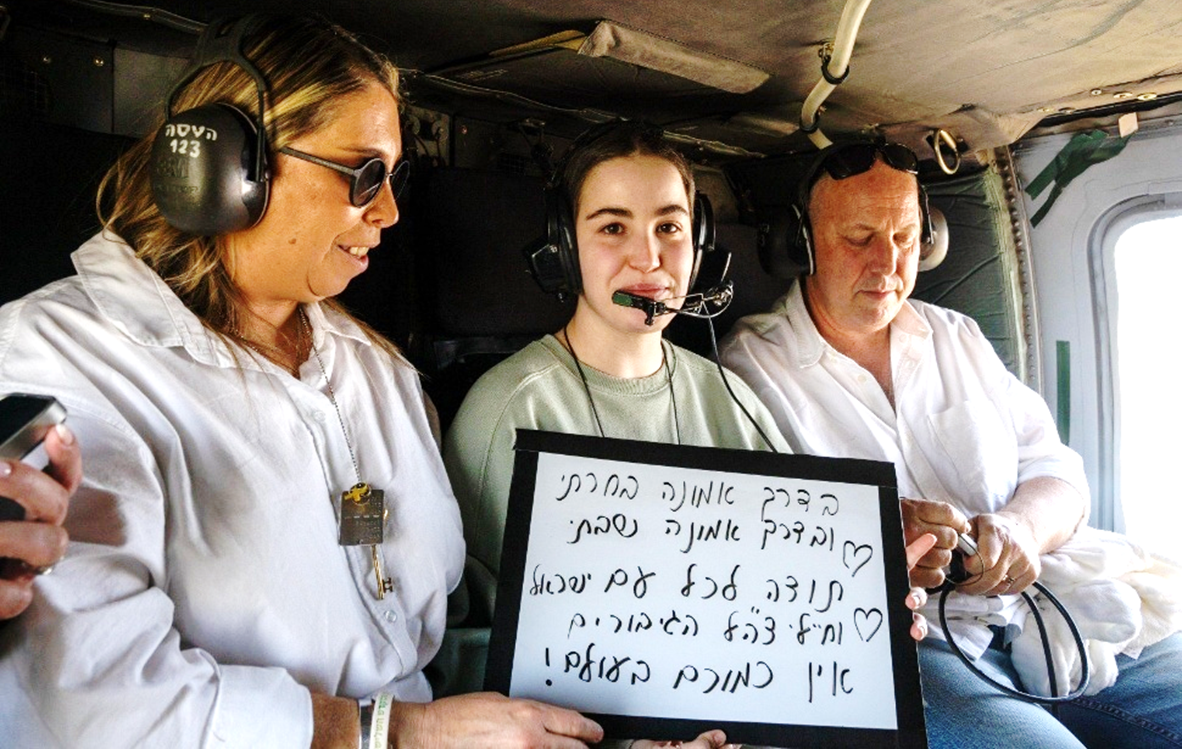
Today, we’ve seen it again in the lives of hostages like Edan Alexander and Agam Berger. Edan, a 21-year-old Israeli-American soldier, was held for 584 days and released from captivity earlier this week. Months ago, we were inspired by his grandmother’s public plea to recite Perek 22 of Tehillim, which became a symbol of national prayer and spiritual resolve. His release, like Agam’s, offered not only personal relief but collective inspiration.

Agam, 20 years old, held for 482 days, became a symbol of strength. She refused to cook on Shabbos, refrained from eating non-kosher meat, and inspired others to fast and pray—even receiving a siddur from her captors. Her mother, Merav, responded not with anger but with mitzvos, encouraging others to be “more Jewish.” Upon her release, Agam held a sign that read: “B’derech emunah bacharti; b’derech emunah shavti – In the path of emunah, I chose; in the path of emunah, I returned.”

These modern stories remind us: resilience is not a relic of the past. The same spirit that burned in Rabbi Akiva’s few remaining students still burns today—in hostages who chose faith, and in families who responded to terror with meaning, mitzvos, and courage.

In her monumental book, The Choice, psychologist and Holocaust survivor Edith Eger writes: “Suffering is universal. But victimhood is optional. There is a difference between victimization and victimhood. We are all likely to be victimized in some way in the course of our lives. At some point we will suffer some kind of affliction or calamity or abuse, caused by circumstances or people or institutions over which we have little or no control. This is life. And this is victimization. It comes from outside. It’s the neighborhood bully, the boss who rages, the spouse who hits, the lover who cheats, the discriminatory law, the accident that lands you in the hospital.

In contrast, victimhood comes from the inside. No one can make you a victim but you. We become victims not because of what happens to us but when we choose to hold on to our victimization. We develop a victim’s mind, a way of thinking and being that is rigid, blaming, pessimistic, stuck in the past, unforgiving, punitive, and without healthy limits or boundaries. We become our own jailors when we choose the confines of the victim’s mind.”

Agam Berger didn’t just survive captivity, she transcended it. Her choices, and those of her family, brought spiritual strength into a place of darkness and transformed suffering into something sacred.

Like Rabbi Akiva, she showed that even when stripped of everything, the human spirit can choose to believe and begin again. Her story, and those like it, reflect a broader truth in Jewish tradition: that descent is often the prelude to ascent. Yosef’s journey to leadership passed through slavery and prison. Moshe’s path to leadership began in exile. Dovid became king only after years of rejection and pursuit. To truly rise, one must first fall, struggle, and wrestle with what is broken.

Living the Principle: Applied Wisdom for Our Darkest Moments

How do we live this?

First, face the collapse. Rabbi Akiva didn’t deny his losses. He accepted the devastation and still chose to begin again.

Second, start with drops, not deluges. He began with five students. Small acts can seed great transformations.

Third, accept that renewal won’t look like restoration. His students didn’t replicate the past; they built the future.

Fourth, remember: you are not the first. Our history is full of people who rose again, who lit fires in the dark.

There is a concept in Kabbalah (which I admit I know very little about) called shevirat hakeilim, the breaking of the vessels. It describes how divine light overflowed the vessels meant to contain it, causing them to shatter and scattering sparks throughout the world. Our task is to gather them, to find the sparks in what’s broken.

Lag B’Omer invites us to see what our history has always known: collapse is not the end. It is often the opening, the hidden ground from which new light breaks forth. The flames we kindle are not mere ritual—they are testimony. They bear witness to a people who, time and again, have chosen faith over despair. The fire of Rabbi Akiva’s few remaining students. The quiet sanctity of a captive who honors Shabbos in a place of fear. This flame, handed down through exile and loss, does not simply tell us that rebuilding is possible. It tells us that rebuilding is inevitable—because it is who we are. It is the eternal fire that refuses to die, reignited each time a Jew chooses to believe, and begins again.

What We Forgot to Remember: The COVID Truth That Slipped Away

Five years have passed since the COVID pandemic began, time enough for meaningful reflection. Among the many aspects of life that COVID disrupted, one area continues to weigh heavily on my mind: how we celebrate our semachot—our weddings, bar and bat mitzvas, and other milestone events.

In the years before March 2020, our community witnessed an unchecked progression toward increasingly lavish celebrations. Events that once centered on family and meaning had transformed into grand productions, often involving expenditures that strained or even broke household budgets. Stories—not apocryphal—circulated about individuals who fell into significant debt merely to afford weddings that lasted hours but cost tens or even hundreds of thousands of dollars. Despite occasional communal initiatives to impose guidelines, like takkanot capping spending in certain communities, the trend continued virtually unabated. Apart from minor shifts, such as the growing acceptance of digital invitations, the communal appetite for extravagance showed no signs of diminishing.

Then came COVID. Suddenly, large-scale events became illegal, declared unsafe, and functionally impossible. Celebrations of all kinds were canceled, postponed, or dramatically reimagined. Some families understandably chose to wait until restrictions eased. But many others, recognizing the importance of the moment, adapted immediately. They held intimate ceremonies with immediate family, backyard weddings, and Zoom bar and bat mitzvas. Meals were pared down to a handful of close relatives. Ceremonies became shorter and more heartfelt. Dancing was understated, if it happened at all.

What proved most remarkable and deeply moving was how these COVID semachot were received. They were often described as more beautiful, more emotional, and more genuine than their pre-pandemic counterparts. (While these adjustments were undoubtedly difficult for many families who had envisioned different celebrations, they were generally met with understanding and even a surprising degree of joy and satisfaction.) I recall attending weddings and bar mitzvas during that period where the emotion in the room was palpable, the meaning inescapable. Stripped of elaborate venues, endless courses, and professional entertainment, the essence of the simcha shone through: family, connection, joy, and holiness.

It seemed, at least to me, that we had stumbled upon a profound revelation. I thought this might represent a lasting correction. Perhaps, even after the pandemic ended, we would carry these lessons forward. Perhaps we would realize that we don’t need the trappings of wealth and spectacle to make a simcha beautiful. Perhaps our community would re-center its priorities, celebrating milestones with sincerity and simplicity.

I remember expressing this hope to others, both privately and in public forums. I recall naively saying that even when COVID ended, we would never fully return to our old ways. We had witnessed too clearly how powerful a simple simcha could be.

But I was wrong.

I first began to sense it even before the pandemic ended, during my own experience of making a simcha in the midst of COVID. A few years earlier, we had celebrated the wedding of one of our children under normal circumstances. It was our family’s introduction to the world of contemporary Jewish weddings. We did our best to focus on what mattered, but it was immediately clear how strong the pressures were—the expectations, the norms, the endless ways that simplicity seemed to require justification.

Then, during COVID, we made another wedding. In theory, the limitations imposed by the pandemic should have naturally pushed celebrations toward simplicity. Venues were restricted, guest lists were slashed, and many familiar trappings were simply impossible. And yet, even then, I sensed the subtle but steady pull—an instinct that if certain features were absent, we had to “make up” for them in other ways. It was not only about practical realities like inflated costs, though that played a role. It reflected something deeper: a communal muscle memory that even a pandemic could not erase.

The emotional pressure was real. Families wanted to express their joy, vendors wanted to provide their services, and friends and relatives wanted to celebrate. All of it created a gravitational pull back toward the familiar patterns. Even amid lockdowns and uncertainty, even with so much stripped away, there was a yearning—sometimes quiet, sometimes not so quiet—to hold onto elements of grandeur and spectacle.

At that point, I first began to worry. I realized that if these instincts were still so strong, even under such unusual circumstances, then perhaps the communal change I was hoping for would not come as easily as I had imagined. Yet even then, I remained somewhat hopeful. I thought that once the instability of the pandemic passed, once people had time to reflect more calmly, we might recognize the beauty we had rediscovered. I thought we would remember how genuine those smaller semachot had felt. I believed—or at least I wanted to believe—that we would not simply return to the old ways.

But as restrictions lifted and normal life resumed, it quickly became evident that there would be no enduring shift. If anything, the trend toward larger and more elaborate celebrations intensified. Weddings grew even grander. Parties became more opulent. New levels of extravagance emerged that had not even been the norm before 2020.

Anecdotally, and I acknowledge I have no hard data to support this, it appears our community has doubled down on its previous habits. Semachot are now as lavish as ever, perhaps more so. We absorbed no lasting lesson from the COVID experience regarding the nature of our celebrations. The opportunity for meaningful, systemic change came and went, leaving behind only faint memories of backyard weddings and intimate family gatherings.

This realization is deeply sobering. It feels as though we were given an extraordinary opportunity, one that came at an immense cost and with real suffering, to reflect, recalibrate, and shift our communal culture. And we let it slip through our fingers.

I often think back to the conversations we had during that time. After these smaller weddings and bar mitzvas, it was common to hear guests—and even hosts—speak with a certain awe. People would say, “There was something so real about tonight,” or “This is the kind of simcha I’ll remember forever.” There was a widespread sense that we had stumbled upon something precious, something stripped of all the extra layers that so often obscure the essence. Without huge crowds, orchestras, and elaborate décor, we could actually feel the heartbeat of the simcha itself—the kedusha of kiddushin, the pride of a parent reciting a bar mitzva speech, the unfiltered joy of family and friends who mattered most.

For many of us, those moments were not merely acceptable substitutes; they were transformative experiences. They offered a glimpse of a kind of joy that was deeper, richer, and closer to what authentic Jewish simcha is meant to be. People spoke about wanting to “hold onto this”—about never wanting to lose the simplicity, the focus, the depth.

And yet, as soon as restrictions lifted, the pull toward old habits proved stronger than the memories. The emotional clarity of those backyard weddings faded faster than we would have imagined. Without consciously realizing it, many of us allowed ourselves to be swept back into the current. The simplicity that once moved us so deeply came to be seen, again, as an unwanted compromise rather than an ideal worth preserving.

Perhaps this is one of the most sobering lessons of all: that even profound experiences can slip away if we do not make a deliberate, determined effort to preserve them.

This is reminiscent of an idea I heard close to 30 years ago in the name of R. Elya Svei zt”l, Rosh Yeshiva of the Philadelphia Yeshiva. He reflected that the extraordinary wealth many segments of the Jewish community enjoy today may itself be a Divine test, though, as he noted, without prophets among us, we must be cautious in making definitive claims about Divine intent. We can only reflect and learn as best we can from the patterns we see. Historically, for most of the two thousand years of our exile, the Jewish people lived in profound poverty. Whether this material deprivation was punitive or simply a consequence of our exilic existence, it certainly served as a necessary correction for a spiritual failure.

The Torah warns about this dynamic explicitly in Parashat Ha’azinu, where it describes what would happen when the Jewish people settled in the Land of Israel: “Jeshurun grew fat and kicked; you grew fat, you grew thick, you became corpulent” (Devarim 32:15). According to this warning, material prosperity would lead to spiritual corruption—indulgence, arrogance, and ultimately rebellion against Hashem. As a consequence, the people would be expelled from the Land. Exile, with all its attendant poverty and hardship, would serve not only as punishment but as a form of rehabilitation, stripping away the excess that had led to spiritual decline.

Now, as the process of redemption slowly unfolds, we see material blessings returning to large parts of our community. R. Svei suggested that this blessing carries with it an implicit challenge: Hashem is giving us another chance. Will we use our newfound prosperity to strengthen Torah, to live with humility and responsibility, to honor His name? Or will we again fall into patterns of indulgence, competition, and spiritual forgetfulness?

This idea struck me deeply, and during the early days of COVID, it became even more vivid. Here was the test laid out before us: celebrations stripped of excess, families rejoicing with sincerity and simplicity, communities reconnecting to the essence of simcha. It felt as if Hashem was showing us, “See? This is possible. This is what true joy can look like.”

Yet five years later, we find ourselves largely back where we started, if not further entrenched in a culture of overindulgence.

I recognize that communal change is not simple. Social norms are powerful forces, difficult to resist. When so much communal energy flows in a certain direction, it is extraordinarily difficult for individuals to chart a different course.

It is important to clarify that my purpose is not to offer practical proposals or solutions. That conversation, if there is interest, will have to come later, and I would be eager to participate. But before we can think about action, we must first be willing to look honestly at where we are. To acknowledge the opportunity that COVID presented, and the extent to which we, as a community, have allowed it to pass us by.

Perhaps it is not too late. Individuals, families, and communities can still choose differently. We can still embrace the vision of simcha that prioritizes meaning over display, holiness over extravagance.

Imagine a wedding celebrated with heartfelt dancing, simple but delicious food, meaningful divrei Torah, and genuine simcha. Imagine a bar mitzva where the emphasis rests on the young man’s davening, leining, and words of Torah, rather than on the extravagance of the party.

We glimpsed this reality during COVID. It was authentic. It was possible. And perhaps it still is.

Choosing new paths is never easy. It requires courage, intentionality, and a willingness to swim against the tide. It means risking misunderstandings, disappointing expectations, and foregoing certain forms of recognition. But the reward can be immeasurable: celebrations that are not only financially sustainable but spiritually elevating; moments that our children will remember not for their glitz but for their warmth, sincerity, and connection to family and to Hashem.

As we look back five years later, let us not merely mourn the missed opportunity. Let us ask ourselves how we can, even now, reclaim some of what was almost within our grasp. We do not need to return to backyard tents or masked chuppahs to reclaim what we nearly discovered. We are no longer bound by the physical restrictions of those days, but the spiritual clarity they offered still remains within reach. We can choose to build celebrations that reflect the same sincerity, the same depth, the same unfiltered joy that so many of us felt during those simpler semachot. We can honor what was almost within our grasp by carrying it forward—freely, deliberately, and with the strength to remember what truly matters most.

This article originally appeared as part of the “COVID+5” series, found here: https://traditiononline.org/covid5-series-introduction/

Israel: Should I Stay or Should I Go?

This conversation took place a few months ago, but sharing it today—on Yom Ha’atzmaut—feels especially timely, particularly for those living outside of Israel.

One of us argues for Aliyah, the other for staying put. It’s a thought-provoking exchange—one that just might leave you as conflicted as when you started.