Over the recent days, we have been privileged to meet some truly remarkable individuals, all united by an unwavering faith in the resilience of the Jewish people. The stories shared with us—of parents mourning children lost to terror or kidnapped, (or “stolen,” as Rachel Goldberg-Polin describes what happened to her son Hersh), of young widows grappling with the loss of their husbands, and of soldiers carrying the weight of severe, life-altering injuries—have been both heart-rending and profoundly moving.
As we concluded our three-day mission, my esteemed colleague, Rabbi Chaim Strauchler, challenged each participant to distill their entire experience into a single word that resonated with them the most. This exercise was meant to encapsulate the depth and breadth of our shared experiences in a personal and meaningful way. Amidst the varied responses, the word that resonated with me, capturing the essence of all that we had witnessed and felt, was “OK.”
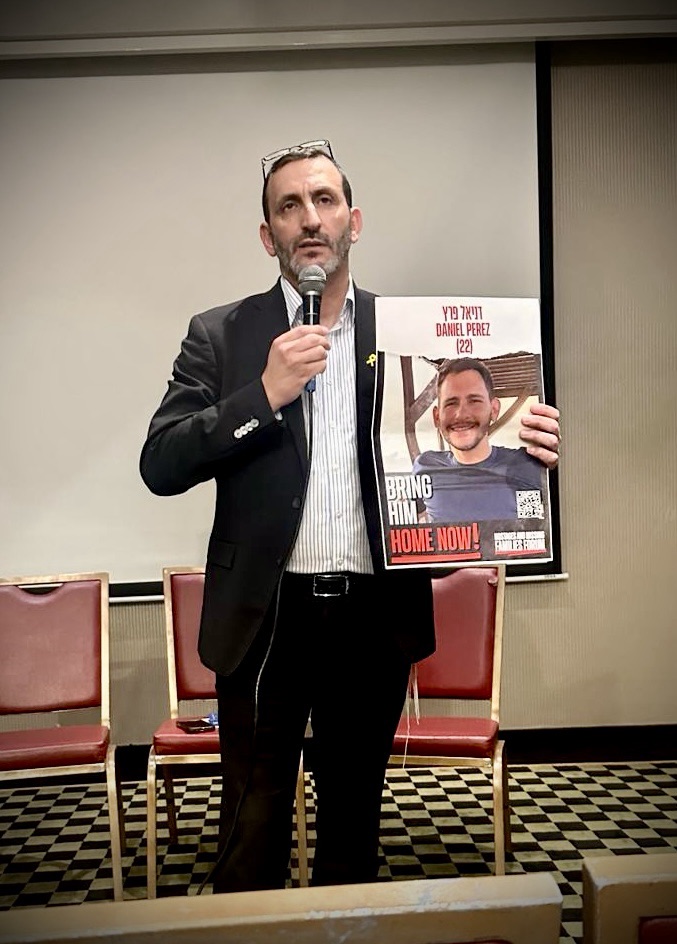
This sentiment was profoundly illustrated in a moment that particularly stood out to me. Earlier today, we had the privilege of hearing from Rabbi Doron Perez, the Executive Chairman of the Mizrachi World Movement, who shared the heart-wrenching story of his son Daniel, taken hostage on October 7, with his fate since then remaining unknown. Rabbi Perez spoke with eloquence and poise, offering a vision of peace and unity for the future, despite his personal ordeal. In his closing remarks, he articulated a fervent hope for his son’s safe return but concluded this prayerful expression with a powerful statement: “Either way, it’s going to be OK.”
This assertion by Rabbi Perez served as a poignant reminder of the incredible challenges we face, the indescribable pain and suffering endured by many, but also of the extraordinary spirit and resilience that define us. His words encapsulated the underlying message of our entire mission: despite the adversity, the uncertainty, and the trials, there is a shared belief among us that, ultimately, everything will be OK.
Every Shabbos, when we read the haftara, we conclude with the following bracha: נֶאֱמָן אַתָּה הוּא ה’ אֱלֹקינוּ, וְנֶאֱמָנִים דְּבָרֶיךָ, וְדָבָר אֶחָד מִדְּבָרֶיךָ אָחוֹר לֹא יָשׁוּב רֵיקָם, כִּי אֵ-ל מֶלֶךְ נֶאֱמָן ורחמן אָתָּה, “You are faithful, Hashem our God, and Your words are faithful, and not one of Your words will return empty, for You are a faithful and merciful King and God.” As we conclude our reading of the words of the prophets, we affirm our faith in the prophetic visions of a hopeful future. This faith sustains us, providing a foundation of hope and resilience that, despite the current turmoil and the sacrifices that may yet be required, reassures us of a brighter future.
In our collective journey, a distinctive aspect of the Jewish experience is the deep-seated knowledge that we know “the end of the story.” This profound awareness doesn’t simplify our path or lessen the trials we encounter but rather illuminates our way with a sense of purpose and hope. The trials and tribulations, the questions and uncertainties we face, are all part of a larger narrative that we believe will culminate in a future filled with peace and unity. This knowledge, that the end of our story is one of coming together in our homeland, in a state of harmony and divine service, offers not just comfort but a resilient optimism. It reassures us that, despite the complexities and challenges of the present, the story’s end is one of fulfillment and redemption, reinforcing our faith that ultimately, everything is going to be OK.